I. Why This Question Matters More Than People Think
When someone asks:
“How many rooms did you equip at your startup?”
They think they’re asking about chairs.
They’re not.
They’re subconsciously asking five much heavier questions—questions about pressure, fear, confidence, and control.
Because this decision quietly sets the tone for your entire first year.
This has nothing to do with brands, colors, or whether you chose A-dec, Forrest, or something off eBay.
This is about timing, stress, and leverage.
Here’s what that one innocent question is really asking:
1. How much financial pressure did you put on yourself—before you even saw your first patient?
Every chair is a monthly obligation, not a piece of furniture.
More rooms = more capital tied up = less breathing room when collections lag (and they always lag early).
The number of ops you equip determines:
- How fast cash leaves your account
- How long your runway is if growth is slower than expected
- Whether month three feels manageable… or suffocating
You didn’t just buy equipment.
You chose a pressure level.
2. How quickly did you need to “win” to feel okay?
More equipped rooms raise the bar for success.
Suddenly:
- Empty chairs feel like failure
- Slow days feel louder
- You start measuring yourself against capacity instead of progress
Fewer rooms lower the emotional threshold:
- A full day feels like momentum
- Growth feels earned, not overdue
Same production.
Completely different psychology.
3. How much operational chaos did you invite into your first year?
Under-equipping creates bottlenecks.
Over-equipping creates complexity.
This decision controls:
- How often your schedule feels jammed
- Whether emergencies derail the day
- How stressed your team feels before systems are dialed in
Your ops count quietly decides whether your office feels calm and in control… or constantly behind.
4. How much future pain were you willing to tolerate to save money now?
Equipping later means:
- Construction noise
- Downtime
- Price increases
- Long equipment lead times
- Re-opening a chapter you desperately wanted closed
Equipping too much now means:
- Paying for space you’re not ready to use
- Carrying dead weight longer than necessary
This is a tradeoff between future pain and present pressure—not a budget decision.
5. What kind of confidence did you want to start with?
Some doctors want to feel:
- Lean
- Controlled
- Nimble
- “I can handle this”
Others want to feel:
- Ready
- Built-out
- Legit
- “I’m set for what’s coming”
Neither is wrong—but mismatching your setup to your personality creates regret fast.
The Real Regret Pattern
Here’s what’s fascinating:
Almost no one says:
“I chose the wrong chair brand.”
But many people say:
“I wish I had timed this differently.”
Because timing locks you in.
- Too much too soon → financial and emotional strain
- Too little too long → growth frustration and burnout
And once patients are flowing, changing that decision is expensive, disruptive, and stressful.
The Truth
This question isn’t about equipment.
It’s about how you wanted your first year to feel.
And most startup regret doesn’t sound like:
“I picked the wrong chair.”
It sounds like:
“I trapped myself in a pace I wasn’t ready for.”
That’s why this decision deserves more than a rule of thumb.
II. What the Crowd Data Actually Says (From Real Owners)
When you remove emotion, ego, and hindsight bias—and just analyze what actually happened across real scratch startups—a very clear pattern emerges.
Not a theory.
Not a consultant slogan.
A behavioral pattern.
This data comes from:
- Owners at different stages (new → 5+ years in)
- Multiple practice models
- Different economic environments (including COVID-era startups)
- People with nothing to sell—just lived experience
And when you cluster the answers, the signal is loud.
The Dominant Pattern (Across Almost Every Model)
3 equipped operatories at opening is the most common starting point.
Not by a small margin—by repetition.
It shows up again and again across:
- General dentistry
- Pediatric dentistry
- Endo-only practices
- Fee-for-service startups
- PPO-heavy practices
- Pre-COVID and COVID-era builds
- Owners who scaled fast and those who scaled conservatively
This matters because these groups do not share incentives, workflows, or economics—yet they converge on the same starting number.
That’s not coincidence.
That’s convergence.
Why 3 Keeps Reappearing (Operationally, Not Emotionally)
Three equipped ops consistently allows:
- One doctor operatory
- One hygiene or turnover buffer
- One flex room for emergencies, overflow, or growth
It creates optional capacity without creating idle pressure.
Owners don’t describe it as “perfect.”
They describe it as forgiving.
And forgiveness is the most underrated variable in a startup.
The Extremes—and Why They Happened (Context Matters)
The outliers are not random.
They follow logic.
The 2-Op Starts
These were not naïve decisions—they were constraint-driven.
Common threads:
- Tight startup budgets
- Cash preservation prioritized over speed
- Specialty practices (endo, surgery-heavy, no hygiene)
- Slower, intentional patient ramp
- Desire to prove demand before expanding
What they gained:
- Lower monthly burn
- Psychological safety early on
What many later reported:
- Faster scheduling bottlenecks than expected
- Less flexibility once volume picked up
- A rushed third-op build later (often at higher cost)
2 ops works—but it narrows the margin for error.
The 4–5+ Op Starts
These weren’t impulsive either. They were future-pain avoidance decisions.
Common threads:
- Strong cash reserves or financing comfort
- High-removable or surgical workflows
- Associate planned within 12–18 months
- COVID-era supply delays influencing “do it all now”
- Owners who deeply disliked construction and disruption
- Firsthand awareness of rapid equipment price inflation
What they gained:
- No mid-year construction chaos
- Immediate capacity when growth hit
- Long-term scalability
What some felt early on:
- Heavier monthly pressure
- Emotional stress seeing unused capacity
- A longer wait before the practice “felt full”
This path works best when confidence and capital are both strong.
The Pattern That Actually Predicts Regret
Here’s the key insight most people miss:
Regret does not correlate with the number of ops.
It correlates with mismatch.
Specifically:
- Too lean for a high-volume or hygiene-driven model → frustration
- Too aggressive for a slow ramp or solo workflow → stress
- Copying someone else’s setup without sharing their constraints → regret
And across dozens of responses, one truth keeps surfacing:
Very few people regret starting with 3.
Not because it’s “optimal”—but because it:
- Absorbs error
- Buys time
- Allows growth without panic
- Doesn’t force premature scaling or premature rebuilding
The Real Crowd Verdict (Unspoken but Clear)
Three operatories isn’t a rule.
It’s a statistical compromise point—where:
- Financial risk
- Operational flexibility
- Emotional bandwidth
- And future scalability
are most evenly balanced for the widest range of owners.
That’s why it shows up across models, personalities, and economic climates.
Bottom Line (Data-Driven, Not Opinion)
Most startup owners don’t look back and say:
“I wish I chose differently.”
They say:
“I’m glad I didn’t box myself in—or bury myself.”
And that’s why the crowd keeps landing in the same place.
Not because it’s trendy.
Because it works.
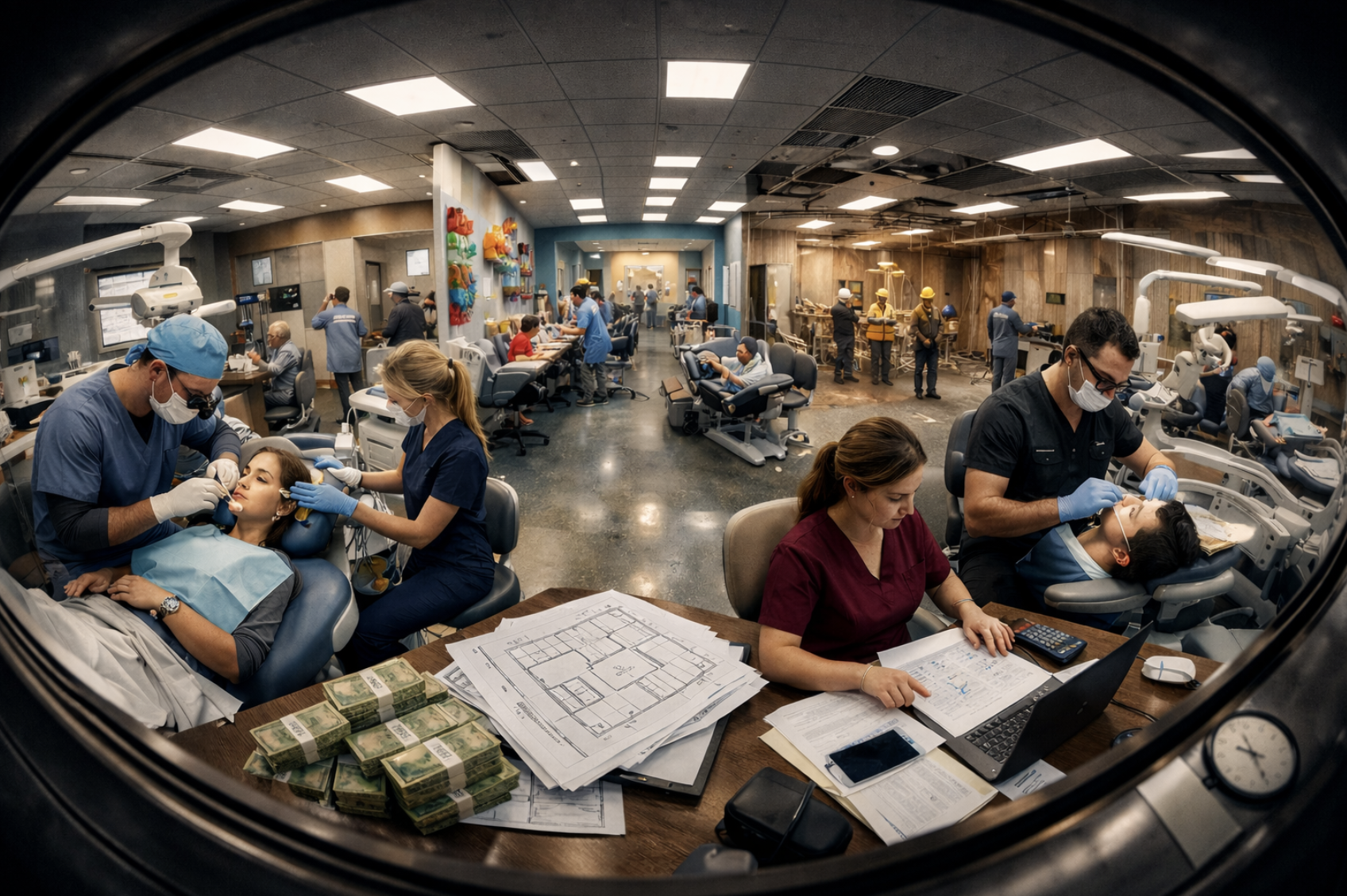
III. The Four Real Variables That Decide the Right Number
(These aren’t opinions. They’re constraints.)
The reason this question creates so much conflicting advice is simple:
people answer it from their own constraints, not from yours.
Same square footage.
Same city.
Same contractor.
Completely different outcomes—because four variables quietly dictate the correct number of operatories long before preferences ever matter.
1. Type of Practice: The Biggest Variable Nobody Can Out-Think
This is where most people go wrong—assuming square footage dictates operatory count.
It doesn’t.
Workflow does.
A general dentist, a pediatric dentist, and an endodontist can stand in the exact same floor plan and need wildly different setups on day one.
For general dentistry, the pattern is consistent.
A solo doctor without hygiene can function with two operatories, but it’s fragile. The moment an emergency shows up, or treatment runs long, the day compresses. That’s why many GPs who start without hygiene still choose to equip a third room—it acts as a pressure-release valve.
Once hygiene enters the picture on day one, three operatories stops being optional. One room becomes hygiene-locked, one becomes doctor-locked, and without a third room the entire schedule becomes hostage to timing.
Pediatric dentistry behaves differently. Volume is higher, appointment times are shorter, and turnover speed matters more than square footage efficiency. That’s why so many peds owners—especially in hindsight—say the same thing: “I wish I had one more op.” Not because they needed it immediately, but because once momentum hit, adding it later became disruptive and expensive.
Endo, surgery-heavy, and removable-focused practices flip the equation entirely. Output per chair is higher. Appointments are longer. Hygiene is often nonexistent. These practices routinely generate strong production with fewer rooms, which is why many of them are perfectly functional starting with two or three equipped operatories.
Same building.
Same size.
Completely different needs.
2. Staffing Reality: The Version of Your Practice That Actually Shows Up
Most startup planning is done around the ideal version of the practice.
But operatory count should be based on the version that actually shows up in month one.
This is where many well-intentioned plans break.
If you truly will not have a hygienist for several months, two operatories can function—barely. The moment you do add hygiene, however, two operatories stop being efficient and start becoming restrictive.
Think through the daily reality:
One room occupied by hygiene.
One room occupied by the doctor.
Where do emergencies go?
Where does a long appointment recover?
Where does the schedule flex?
That’s why two operatories looks clean in a spreadsheet—but creates friction in real life.
Three operatories doesn’t make the practice “bigger.”
It makes it more resilient.
Two works on paper.
Three works when patients, staff, and real-world chaos show up.
3. Cash Flow vs. Construction Fatigue: A Trade-Off, Not a Preference
This variable quietly splits owners into two distinct camps—and both are rational.
Some owners choose to equip more operatories up front because they are protecting themselves from future pain. Construction disruption, equipment lead times, and price inflation are not theoretical. Several owners reported increases of $10–15k per room within a single year. Add in months-long waits for chairs and install delays, and the logic becomes clear: “I want this chapter closed.”
For these owners, the psychological benefit is real. The office is finished. The build is done. The focus shifts entirely to practicing dentistry.
Other owners take the opposite approach. They stage their equipment intentionally, preserving cash and proving demand before expanding. This strategy protects early cash flow and lowers stress during the riskiest months of ownership.
Both approaches work.
Where regret shows up is when owners unintentionally mix them—equipping too much for their cash tolerance, or staging too aggressively without a clear expansion trigger.
The mistake isn’t the philosophy.
It’s drifting between them without deciding which pain you’re choosing.
4. Patient Ramp Assumptions: The Quiet Multiplier
Almost every startup overestimates early demand.
Not because they’re unrealistic—but because growth is lumpy. There are quiet weeks, sudden surges, and unpredictable patterns in the first six months.
Data from owner experience shows a consistent reality:
Most startups do not need more than three fully functional operatories in their first 6–12 months.
But they do need the ability to scale quickly once momentum arrives.
That’s why plumbing more rooms than you equip often shows up as the smartest compromise. It preserves flexibility without locking you into premature overhead.
This isn’t about pessimism.
It’s about building a practice that can grow without friction when the moment arrives.
The Underlying Truth
These four variables—practice type, staffing reality, cash philosophy, and patient ramp—decide the number long before preference ever enters the conversation.
That’s why there is no universal answer.
And why copying someone else’s setup without sharing their constraints is the fastest path to regret.
When these variables are aligned, almost any operatory count works.
When they’re ignored, even “standard advice” fails.
That’s the difference between guessing…
and designing a startup that actually fits.
IV. The Hidden Cost Nobody Talks About: Under-Equipping
Under-equipping rarely hurts at the beginning.
That’s why it’s so deceptive.
When a practice opens with two operatories, the first few weeks often feel fine—sometimes even calm. The schedule isn’t full yet. The team is learning. The phones are still warming up. On paper, nothing looks broken.
But under-equipping doesn’t fail loudly.
It fails silently—and then all at once.
The moment patient volume starts to rise, the cracks appear.
Not in production reports.
In the day.
What Actually Breaks First (It’s Not Revenue)
The earliest pain point is schedule compression.
With two operatories, every appointment has to be perfectly timed. There is no slack. One long crown prep, one late patient, one emergency walk-in—and the entire day starts cascading.
Doctors begin to feel rushed even on “normal” days. Assistants feel pressure to turn rooms faster than systems allow. Front desks hesitate to say yes to same-day care, not because they don’t want the production—but because there is physically nowhere to put it.
This is the point where owners start thinking:
“We’re busy… but it feels harder than it should.”
That’s under-equipping at work.
The Bottleneck Nobody Plans For: Flexibility Loss
Two-op practices don’t fail because they can’t treat patients.
They struggle because they can’t absorb unpredictability.
Real practices deal with:
- Emergencies
- Overruns
- Hygiene delays
- Same-day opportunities
- Staff learning curves
With only two operatories, every variable becomes a threat.
What disappears first is:
- Same-day dentistry
- Emergency acceptance without stress
- Adding hygiene without reshuffling the entire day
- The ability to recover from a bad morning
Owners report they stop saying yes—not strategically, but defensively.
And every defensive “no” costs:
- Production
- Patient goodwill
- Team morale
The Psychological Cost: Constant Micro-Stress
This is where under-equipping does its most damage.
When there’s no buffer room, the doctor becomes the buffer.
Every delay lives in their head.
Every schedule hiccup becomes personal.
Every patient running late feels heavier than it should.
Over time, this creates a low-grade, constant stress that’s hard to articulate but easy to feel.
Owners describe it as:
- “Always behind”
- “Always catching up”
- “Always tight”
Not because the practice is failing—but because it has no margin.
Burnout Accelerates—Even When Production Is Fine
Here’s the most counterintuitive data point:
Under-equipped practices don’t burn doctors out because they’re unprofitable.
They burn them out because they’re inefficient under pressure.
The mental load of running a perfectly packed two-room schedule day after day is exhausting. There’s no breathing room. No catch-up room. No safety valve.
Many owners report that the decision to add a third operatory wasn’t driven by money—it was driven by fatigue.
They weren’t trying to grow faster.
They were trying to make the day feel survivable again.
Why This Regret Shows Up Late
This is why under-equipping is so often defended early and regretted later.
At opening:
- It feels smart
- It feels lean
- It feels controlled
Six to twelve months in:
- It feels cramped
- It feels reactive
- It feels heavier than it should
By the time the need is obvious, the fix is no longer easy. Construction, equipment delays, and rising costs turn a simple decision into a major disruption—right when the practice can least afford downtime.
The Line Most Owners Cross Without Realizing It
There’s a moment many owners describe—often months after opening—when they realize:
“We’re not short on patients.
We’re short on room to operate.”
That realization is the true cost of under-equipping.
You don’t feel limited at first.
You feel it the instant growth arrives—
and by then, the price of changing course is much higher.
The Takeaway That Matters
Under-equipping doesn’t save you money forever.
It borrows stress from the future.
And the interest rate is paid in:
- Missed opportunities
- Compressed days
- Emotional exhaustion
- And delayed momentum
That’s the cost most people never mention—until they’ve already paid it.
V. The Hidden Cost Nobody Expects: Over-Equipping
Over-equipping doesn’t hurt the way people think it will.
There’s no immediate crisis.
No dramatic failure.
No obvious red flag.
That’s why it’s so dangerous.
When a startup equips four, five, or more operatories right out of the gate, the practice often opens beautifully. Everything is finished. The build is done. There’s a sense of relief—finally, I can just practice dentistry.
But over-equipping doesn’t create pain on day one.
It creates background pressure that quietly reshapes how the owner thinks, schedules, and reacts.
The First Cost: Cash Pressure That Doesn’t Show Up on the P&L
Every equipped operatory converts future potential into present obligation.
Even when chairs sit unused, the costs are active:
- Financing payments
- Depreciation
- Service contracts
- Insurance
- Technology tied to each room
What owners report isn’t panic—it’s a constant tightening.
They don’t think, “We’re losing money.”
They think, “We should be busier than this.”
And that thought subtly changes behavior.
The Second Cost: Empty Chairs Become Psychological Debt
This is the cost nobody budgets for.
Empty operatories are not neutral assets.
They become silent scoreboards.
Every unused room quietly asks:
- “Why isn’t this filled?”
- “Should I be producing more?”
- “Am I behind?”
Owners who over-equipped early consistently describe the same experience: the space was meant to feel empowering, but instead it created urgency before the practice was ready to absorb it.
It’s not logical stress.
It’s visual stress.
You can’t ignore what you see all day.
The Third Cost: Artificial Urgency Distorts Decision-Making
With excess capacity, owners often feel pressure to justify it.
This leads to subtle but meaningful shifts:
- Taking on less-ideal insurance sooner than planned
- Compressing schedules prematurely
- Adding services before systems are mature
- Hiring faster than training allows
None of these decisions are reckless in isolation.
But they’re often driven by the same underlying thought:
“We need to use what we built.”
Over-equipping doesn’t force bad decisions.
It nudges good owners toward rushed ones.
The Fourth Cost: Overhead Hits Before Momentum Arrives
In most startups, growth is uneven. There are slow weeks, sudden surges, then quiet stretches again.
Over-equipping assumes a smooth ramp—and reality rarely cooperates.
When fixed overhead is high early:
- Slow weeks feel heavier
- Variability feels personal
- Confidence erodes faster
Owners who eventually grew into their capacity still describe the early months as unnecessarily stressful—not because growth didn’t come, but because the practice carried weight it hadn’t earned yet.
Why This Regret Is Rarely Admitted Publicly
Here’s what makes over-equipping tricky to talk about:
Most owners do eventually grow into the space.
So from the outside, it looks like a win.
But privately, many admit:
- “It felt heavier than it needed to early on.”
- “I wouldn’t do it the same way again.”
- “It created pressure before momentum existed.”
Over-equipping doesn’t always produce failure.
It produces avoidable stress.
The Truth That Actually Matters
Empty chairs don’t hurt the practice.
They hurt the owner’s nervous system.
They change how success feels.
They shift focus from progress to utilization.
They create urgency before readiness.
And while some owners thrive under that pressure, many don’t realize they’re choosing it until they’re living with it every day.
The Takeaway That Saves Regret
Over-equipping isn’t wrong.
It’s just expensive—in ways spreadsheets don’t capture.
If your cash reserves, temperament, and patience can absorb unused capacity calmly, it can be a powerful long-term move.
If not, those empty chairs won’t wait politely.
They’ll ask for attention — every single day — until the practice grows fast enough to silence them.
VI. A Practical Decision Framework (Use This)
Most startup mistakes don’t come from bad advice.
They come from answering the right question with the wrong inputs.
This framework works because it doesn’t ask what sounds smart—it asks what your future self can actually live with.
Read this slowly. The value is in the honesty.
Step 1: Answer These Five Questions—Brutally Honestly
These are not planning questions.
They are constraint questions.
They force you to confront reality instead of optimism.
First: Will you truly have hygiene on day one?
Not “eventually.” Not “ideally.”
Actually on payroll, actually scheduled, actually producing.
If hygiene is present from day one, one operatory is functionally locked. That single fact alone eliminates two ops as a sustainable long-term setup.
Second: Will you routinely need a flex or emergency room?
If you say “yes” to same-day dentistry, emergencies, or surgical overflow—but don’t give yourself physical space to deliver it—you’ve created a promise your schedule can’t keep.
Practices don’t lose money because they’re slow.
They lose money because they can’t say yes when opportunity walks in.
Third: What is your realistic patient ramp in the first six months?
Not your best-case scenario.
Not what the broker told you.
What happens if growth is uneven, delayed, or lumpy—which it often is?
Most startups experience bursts, not smooth curves. Your operatory count should absorb variability, not assume perfection.
Fourth: Can you emotionally tolerate doing construction again later?
This is the question most people skip—and later regret skipping.
Adding an operatory later isn’t just money. It’s:
- Noise
- Downtime
- Team frustration
- Mental fatigue
- Re-opening a chapter you thought was closed
Some owners are fine with this. Others are deeply affected by it.
Know which one you are before deciding.
Fifth: Can your cash reserves tolerate unused capacity without panic?
Empty chairs are not neutral. They are psychological.
If seeing unused space will make you anxious, rushed, or second-guess yourself, you are not buying “future readiness”—you’re buying stress.
Unused capacity only works when your temperament and reserves can carry it calmly.
Step 2: Match Your Reality—Not Your Aspirations
Once those five questions are answered honestly, the right operatory range becomes surprisingly clear.
Here’s how real-world profiles consistently align when you strip away ego and hindsight:
A solo general dentist without hygiene can operate with two operatories, but three provides resilience. Two is survivable. Three is forgiving.
A solo general dentist with hygiene from day one needs three. Not as a growth move—as a functional baseline. Anything less creates immediate bottlenecks.
Pediatric practices overwhelmingly land at three initially, with a strong pattern of wishing they had equipped a fourth sooner. Volume, turnover, and unpredictability amplify space needs faster than expected.
Endo, surgery-heavy, or removable-focused practices produce more per chair and often function well with two to three initially. Their constraint is workflow, not turnover speed.
If you are planning to add an associate within 12–18 months, equipping four or more upfront often reduces future disruption and accelerates scalability—if cash flow supports it.
If you are cash-light or risk-averse, two to three operatories protect runway and reduce early pressure. This works best when paired with a clear expansion trigger.
If you are cash-strong and deeply construction-averse, three to four operatories upfront often buys long-term peace—again, assuming emotional tolerance for unused space.
The Insight That Makes This Framework Work
This is not about choosing the “right” number.
It’s about choosing the number that:
- Matches your temperament
- Matches your staffing reality
- Matches your cash tolerance
- Matches your growth uncertainty
When those align, almost any operatory count works.
When they don’t, even “standard advice” fails.
The One Rule That Never Breaks
If your decision:
- Forces perfection to survive
- Punishes unpredictability
- Or creates constant low-grade stress
…it’s the wrong number—no matter how common it is.
The goal isn’t maximum capacity.
The goal is maximum margin for error.
That’s what lets startups grow calmly, scale intentionally, and avoid the most expensive kind of regret—the kind you only recognize after momentum arrives.
The Strategic Power of Unequipped Rooms
One of the most overlooked insights from the real-world responses wasn’t how many rooms people equipped.
It was what they did with the ones they didn’t.
Several owners unintentionally stumbled onto something sophisticated:
they separated “plumbed” from “pressurized.”
And that distinction changed how their practices grew.
An unequipped room isn’t dead space.
It’s optionality.
Owners who used these rooms creatively reported less stress, smoother days, and easier future expansion—without committing capital too early.
Here’s what actually worked in practice.
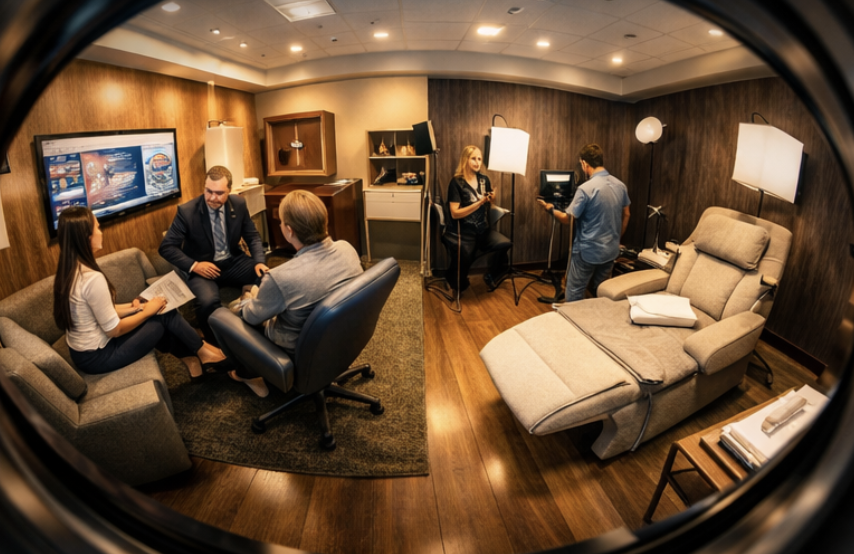
Some converted unequipped operatories into pre- and post-op recovery spaces. This single move improved flow more than adding another chair would have. Patients had a place to decompress. Clinical rooms turned over faster. The day felt calmer, not busier.
Others used them as consult-only rooms. No lights. No delivery units. Just chairs, screens, and privacy. Case acceptance improved—not because the dentistry changed, but because conversations had space to breathe. These rooms quietly increased production without adding clinical overhead.
Several owners used unequipped rooms for photography, branding, or content creation. A neutral backdrop. Proper lighting. A controlled environment. This became a long-term marketing asset that paid dividends far beyond the cost of equipment.
In removable, surgery-heavy, or hybrid practices, some placed upright or med-spa style chairs instead of full dental units. These rooms handled removable prosth adjustments, Botox, consults, or postop checks—high-value uses without the full financial commitment of a traditional operatory.
And yes—some even added massage or relaxation chairs. Not as a gimmick, but as a patient-experience differentiator and a pressure valve during longer appointments.
What all of these owners discovered—often by accident—is this:
An unequipped room is not wasted space.
It’s delayed commitment with immediate utility.
It gives you room to solve problems creatively before throwing money at them.
The Real Question to End With
After all the numbers, advice, and patterns, the most important realization is this:
Most people are asking the wrong question.
They ask:
“How many operatories should I equip?”
But the owners who felt calm, flexible, and confident asked something different—sometimes without realizing it.
They were really asking:
“What decision lets me grow without feeling trapped—financially, operationally, or emotionally?”
That question changes everything.
It shifts the focus from:
- Capacity → resilience
- Square footage → margin for error
- Optimization → survivability
And it explains why copying someone else’s setup—without their constraints—almost always backfires.
Closing Takeaway
Most startups don’t struggle because they chose the wrong number of chairs.
They struggle because they made a permanent decision based on a temporary assumption.
They planned for perfection instead of variability.
They optimized for best case instead of survivability.
They chose a number without choosing a reason.
Three operatories isn’t a rule.
It’s a thinking tool.
A place to start when clarity matters more than confidence—and flexibility matters more than bravado.
Because in a startup, the smartest decision isn’t the boldest one.
It’s the one that still works... when reality shows up unannounced.
For more helpful tips, strategies, ideas, and marketing advice, listen to The Dental Marketer Podcast.
